The Black Eye Club: Mysteries And Theories Explained
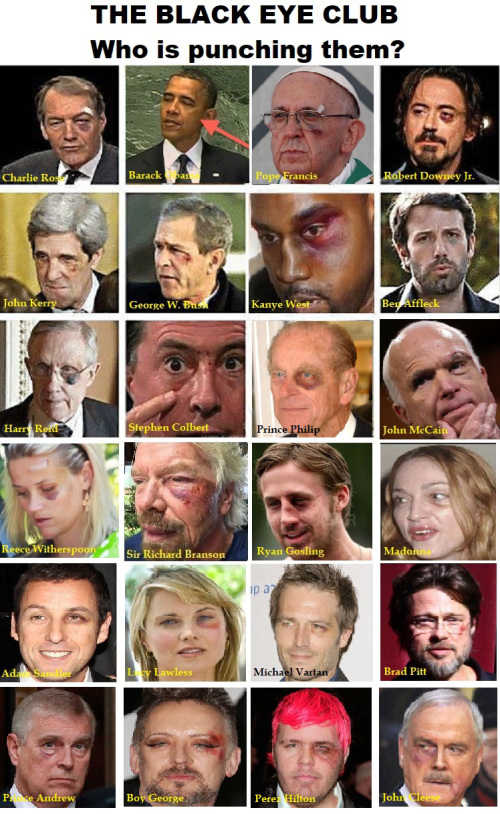
The term "Black Eye Club" often evokes curiosity and speculation, as it refers to a mysterious phenomenon involving public figures who appear with unexplained black eyes. This has led to various theories, some suggesting it's a symbol of initiation, while others perceive it as mere coincidence or a result of accidents. Despite the controversy and intrigue surrounding it, the true nature of the Black Eye Club remains elusive and largely unexplained.
Theories surrounding the Black Eye Club have ranged from the plausible to the fantastical. Some believe it to be linked to secret societies, where the black eye represents a rite of passage or initiation process. Meanwhile, skeptics argue that there’s no secret organization and that the black eyes are nothing more than accidents or medical procedures. The phenomenon has captured the imagination of conspiracy theorists and the general public alike, making it a topic ripe for exploration and discussion.
In this comprehensive article, we will delve into the various aspects of the Black Eye Club: its origins, the theories that have emerged, notable personalities who have been linked to it, and the cultural impact it has had over time. By examining these elements, we aim to provide a thorough understanding of what the Black Eye Club is and why it continues to captivate the minds of many.
Table of Contents
- Origin of the Black Eye Club
- Theories and Speculations
- Notable Figures Linked to the Club
- Cultural Impact and Media Coverage
- Debunking Myths and Conspiracies
- Psychological and Sociological Perspectives
- Medical Explanations
- Symbolism and Rituals
- Public Perception and Reaction
- Role of Social Media
- Comparison with Other Conspiracies
- Expert Opinions
- Future of the Black Eye Club
- Frequently Asked Questions
- Conclusion
Origin of the Black Eye Club
The origin of the Black Eye Club is shrouded in mystery and speculation. It is believed to have gained attention in the late 20th century when various public figures began appearing with unexplained black eyes. The phenomenon seemed to cross various fields, from entertainment to politics, fueling rumors and conspiracy theories. Some suggest that the concept of the Black Eye Club may have been born out of the need to explain these sudden bruises among influential people, especially when no plausible explanation was provided.
Tracing back the roots of this phenomenon, it is important to understand the cultural and historical context in which it emerged. During the time of its alleged inception, there was a heightened interest in secret societies and their influence on global events. This curiosity fed into the narrative that the black eye was a mark of initiation or punishment within these clandestine organizations. However, there is no concrete evidence to support these claims, and the true origin of the Black Eye Club remains speculative at best.
In terms of documented cases, the earliest mentions of the Black Eye Club are difficult to pinpoint, as the concept largely circulated through word of mouth and anecdotal evidence. The lack of official records or confirmation from those involved has only added to the enigma, making it a fertile ground for conspiracy theorists and mystery enthusiasts alike. Despite various attempts to uncover the truth, the origins of the Black Eye Club continue to elude even the most dedicated researchers.
Theories and Speculations
Theories about the Black Eye Club are as varied as they are intriguing. One of the most popular theories is that the black eye is a symbol of initiation into a secret society. Proponents of this theory argue that the black eye serves as a visible mark of allegiance or participation in esoteric rituals. This idea has been fueled by the involvement of high-profile individuals, leading some to speculate that these figures are part of an elite group that operates behind the scenes.
Another theory posits that the black eyes are simply the result of accidents or medical procedures. This explanation is often supported by skeptics who argue that there is no evidence to suggest a coordinated effort or secret society. They point to the fact that black eyes can occur from a variety of mundane causes, such as sports injuries, cosmetic surgeries, or even simple mishaps.
In addition to these theories, there are also those who believe that the Black Eye Club is a deliberate hoax or social experiment designed to test public perception and gullibility. This perspective suggests that the phenomenon is a fabricated narrative, crafted to see how quickly and widely misinformation can spread. While this theory lacks substantial evidence, it highlights the power of suggestion and the role of media in shaping public beliefs.
Notable Figures Linked to the Club
Throughout the years, various public figures have been associated with the Black Eye Club, either through direct involvement or speculation. These individuals span a wide range of fields, including politics, entertainment, and business. Their appearances with black eyes have often sparked media frenzy and public curiosity, adding fuel to the conspiracy theories surrounding the phenomenon.
Some of the most frequently mentioned names include celebrities and politicians who have been photographed with unexplained black eyes. These images are often circulated online, accompanied by claims of secret society involvement or other nefarious activities. While some of these cases have plausible explanations, others remain enigmatic, leaving room for speculation and debate.
It is important to note that not all individuals linked to the Black Eye Club endorse or acknowledge the existence of such a group. Many have dismissed the claims as baseless rumors, emphasizing that their black eyes were the result of accidents or medical procedures. Nevertheless, the association with the Black Eye Club continues to follow these figures, often overshadowing their professional achievements and personal lives.
Cultural Impact and Media Coverage
The cultural impact of the Black Eye Club is significant, as it has become a topic of fascination and intrigue for many. The phenomenon has been the subject of numerous articles, documentaries, and discussions, both online and offline. Media coverage has played a crucial role in shaping public perception, often framing the Black Eye Club as a mysterious and enigmatic occurrence.
Television shows, films, and books have also explored the concept of the Black Eye Club, weaving it into fictional narratives that captivate audiences. This portrayal in popular culture has contributed to the mystique surrounding the phenomenon, blurring the lines between fact and fiction. As a result, the Black Eye Club has become a cultural touchstone, symbolizing the allure of the unknown and the power of conspiracy theories in modern society.
Furthermore, the media's portrayal of the Black Eye Club has sparked debates about the ethics of conspiracy theories and their impact on public discourse. Critics argue that sensationalized coverage can perpetuate misinformation and fuel paranoia, while others believe that exploring such phenomena is a legitimate pursuit of truth and understanding.
Debunking Myths and Conspiracies
Despite the widespread fascination with the Black Eye Club, many experts and skeptics have attempted to debunk the myths and conspiracies surrounding it. By examining the evidence, or lack thereof, they aim to separate fact from fiction and provide a more rational explanation for the phenomenon.
One common approach to debunking the Black Eye Club is to analyze the medical and scientific aspects of black eyes. Experts point out that black eyes are a common injury that can result from a variety of causes, such as trauma, surgery, or even allergies. This perspective suggests that the occurrence of black eyes among public figures is simply a coincidence, rather than evidence of a secret society.
Another method of debunking involves scrutinizing the motives and credibility of those who propagate the conspiracy theories. Critics argue that some individuals may have financial or ideological incentives to promote the existence of the Black Eye Club, and that their claims should be taken with a grain of salt. By questioning the sources and motivations behind the theories, skeptics hope to foster a more critical and informed public discourse.
Psychological and Sociological Perspectives
The Black Eye Club can also be examined through the lens of psychology and sociology, as it offers insights into human behavior and societal dynamics. From a psychological standpoint, the allure of the Black Eye Club may be linked to the human desire for mystery and intrigue. People are naturally drawn to the unknown, and conspiracy theories provide a sense of excitement and adventure that can be lacking in everyday life.
Sociologically, the Black Eye Club can be seen as a reflection of broader societal trends and anxieties. In an age of information overload, people may gravitate towards conspiracy theories as a way to make sense of the world and assert control over their environment. The Black Eye Club, with its enigmatic nature and high-profile figures, offers a compelling narrative that resonates with these underlying fears and desires.
Furthermore, the Black Eye Club highlights the role of social networks and online communities in shaping public perception. The internet has made it easier than ever for conspiracy theories to spread, as people can easily share information and connect with like-minded individuals. This digital landscape has amplified the reach and impact of the Black Eye Club, turning it into a global phenomenon that transcends traditional media boundaries.
Medical Explanations
While the Black Eye Club is often shrouded in mystery, there are also medical explanations that offer a more grounded perspective on the phenomenon. Black eyes, medically known as periorbital hematomas, are a common injury that occurs when blood vessels around the eyes are damaged. This can result from various causes, including trauma, surgery, or even certain medical conditions.
In the context of the Black Eye Club, some experts suggest that the black eyes seen among public figures may be the result of cosmetic procedures, such as blepharoplasty or filler injections. These procedures can sometimes lead to bruising around the eyes, which may explain the sudden appearance of black eyes in individuals who are frequently in the public eye.
Additionally, some medical conditions, such as allergies or sinus infections, can cause swelling and discoloration around the eyes, resembling a black eye. This medical perspective provides a plausible and non-conspiratorial explanation for the phenomenon, emphasizing the importance of considering all potential causes before jumping to conclusions.
Symbolism and Rituals
The idea of the Black Eye Club as a symbol or ritualistic practice is a recurring theme in many conspiracy theories. Some believe that the black eye is a mark of initiation or punishment within secret societies, serving as a visible sign of allegiance or compliance. This perspective is often fueled by the involvement of high-profile individuals, leading to speculation about their participation in clandestine organizations.
Symbolically, the black eye may represent a variety of concepts, such as sacrifice, transformation, or enlightenment. These interpretations are often rooted in historical and cultural contexts, drawing on ancient symbols and practices that have been associated with secret societies and esoteric traditions.
While there is no concrete evidence to support these claims, the symbolism of the Black Eye Club continues to captivate the imagination of many. This fascination is often fueled by a desire to uncover hidden truths and challenge established narratives, reflecting the enduring human quest for knowledge and understanding.
Public Perception and Reaction
The public perception of the Black Eye Club is varied and complex, reflecting a wide range of beliefs and attitudes. For some, the phenomenon is a source of intrigue and mystery, offering a glimpse into a hidden world of power and influence. Others view it as a baseless conspiracy theory, dismissing the claims as sensationalized and unfounded.
Reactions to the Black Eye Club are often influenced by individual worldviews and personal experiences. Those who are more inclined towards conspiracy theories may see the Black Eye Club as evidence of a larger, hidden agenda, while skeptics may dismiss it as a coincidence or fabrication. This diversity of opinions highlights the complexity of the phenomenon and its ability to resonate with different audiences.
Despite the varying perceptions, the Black Eye Club has undoubtedly captured the public imagination, becoming a topic of discussion and debate. This widespread interest underscores the power of mystery and the allure of the unknown, as people continue to seek answers and unravel the secrets behind the phenomenon.
Role of Social Media
Social media has played a significant role in the spread and perpetuation of the Black Eye Club phenomenon. Platforms like Twitter, Facebook, and Instagram have become conduits for sharing information and theories about the Black Eye Club, allowing users to connect and engage with others who share their interests and beliefs.
The viral nature of social media has amplified the reach of the Black Eye Club, turning it into a global phenomenon that transcends traditional media boundaries. This digital landscape has enabled the rapid dissemination of information, both accurate and speculative, contributing to the phenomenon's enduring intrigue and complexity.
While social media has facilitated the spread of the Black Eye Club, it has also raised questions about the ethics of conspiracy theories and the responsibility of platforms to regulate content. Critics argue that social media can perpetuate misinformation and fuel paranoia, while others believe that it provides a space for open discussion and exploration of alternative perspectives.
Comparison with Other Conspiracies
The Black Eye Club is often compared to other conspiracy theories, as it shares similarities in terms of mystery, intrigue, and the involvement of high-profile individuals. Like other conspiracies, the Black Eye Club relies on a narrative of hidden truths and secret societies, drawing on historical and cultural symbols to create a compelling story.
One notable comparison is with the Illuminati, a secret society that has been the subject of numerous conspiracy theories over the years. Both the Black Eye Club and the Illuminati involve the idea of an elite group operating behind the scenes, influencing global events and maintaining control over society.
However, the Black Eye Club is unique in its focus on the specific phenomenon of black eyes and the symbolism associated with them. This specificity sets it apart from other conspiracies, highlighting the diverse range of narratives and interpretations that can emerge from seemingly unrelated events and symbols.
Expert Opinions
Experts from various fields have weighed in on the Black Eye Club phenomenon, offering insights and perspectives that shed light on the mystery. While opinions vary, many experts emphasize the importance of critical thinking and skepticism when approaching conspiracy theories.
From a psychological standpoint, experts suggest that the allure of the Black Eye Club may be linked to the human desire for mystery and intrigue. Conspiracy theories provide a sense of excitement and adventure that can be lacking in everyday life, appealing to those who seek alternative explanations and narratives.
Medical professionals, on the other hand, offer more grounded explanations for the phenomenon, pointing to the commonality of black eyes as an injury and the potential for cosmetic procedures to result in bruising. This perspective highlights the importance of considering all potential causes before jumping to conclusions.
Future of the Black Eye Club
The future of the Black Eye Club is uncertain, as it continues to captivate the public imagination and spark debate and discussion. As new information and theories emerge, the phenomenon may evolve and take on new meanings and interpretations.
In an age of information overload, the Black Eye Club serves as a reminder of the power of mystery and the allure of the unknown. As people continue to seek answers and unravel the secrets behind the phenomenon, the Black Eye Club is likely to remain a topic of fascination and intrigue for years to come.
Ultimately, the future of the Black Eye Club will depend on the willingness of individuals to engage critically and thoughtfully with the information and narratives that surround it. By approaching the phenomenon with an open mind and a healthy dose of skepticism, people can gain a deeper understanding of the complexities and nuances that define the Black Eye Club.
Frequently Asked Questions
- What is the origin of the Black Eye Club?
- Are there any known members of the Black Eye Club?
- What are the common explanations for black eyes among public figures?
- How do conspiracy theories about the Black Eye Club spread?
- What role does social media play in the Black Eye Club phenomenon?
- What do experts say about the Black Eye Club?
The origins of the Black Eye Club are speculative, with theories ranging from secret societies to coincidences. It gained attention in the late 20th century when public figures appeared with unexplained black eyes.
There are no official members, but various public figures have been speculated to be part of the Black Eye Club due to their unexplained black eyes.
Common explanations include accidents, medical procedures, or cosmetic treatments that result in bruising around the eyes.
Conspiracy theories often spread through social media platforms, where users can share information and engage with others who share similar beliefs.
Social media amplifies the reach of the Black Eye Club, allowing for rapid dissemination of information and theories, both accurate and speculative.
Experts emphasize the importance of critical thinking and skepticism, suggesting that the phenomenon may appeal to the human desire for mystery and intrigue.
Conclusion
The Black Eye Club remains a topic of fascination and intrigue, captivating the minds of many with its enigmatic nature and association with high-profile figures. While various theories and explanations have emerged, the true nature of the phenomenon remains elusive and largely unexplained.
Through examining the origins, theories, notable figures, and cultural impact of the Black Eye Club, we gain a deeper understanding of the complexities and nuances that define this mysterious phenomenon. Whether viewed as a symbol of initiation, a result of coincidence, or a fabricated narrative, the Black Eye Club continues to captivate the public imagination and spark debate and discussion.
Ultimately, the Black Eye Club serves as a reminder of the power of mystery and the allure of the unknown, as people continue to seek answers and unravel the secrets behind the phenomenon. As new information and theories emerge, the Black Eye Club is likely to remain a topic of fascination and intrigue for years to come.