Mastering SEO Competitor Rank Tracker: A Guide To Outperform Your Rivals
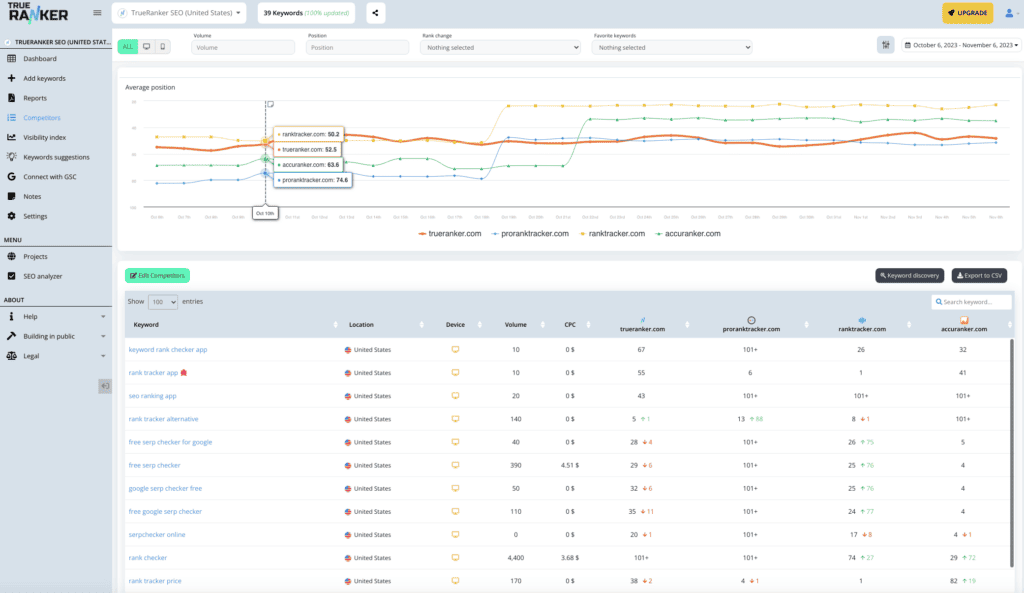
Tracking competitor rankings is not just about keeping tabs on their performance—it's about gaining actionable insights that can be leveraged to improve your SEO strategy. An effective SEO competitor rank tracker can reveal which keywords your competitors are targeting, how well they are performing, and where you stand in comparison. This information is crucial for identifying gaps in your own SEO efforts and making informed decisions on how to optimize your website for better visibility and higher rankings. Moreover, an SEO competitor rank tracker is an invaluable tool for businesses looking to maintain a competitive edge. By regularly monitoring your competitors' rankings, you can anticipate shifts in the market, adapt your strategies accordingly, and ensure that your business remains at the forefront of search results. With the right tools and a strategic approach, businesses of all sizes can harness the power of SEO competitor rank tracking to drive growth and success.
Table of Contents
1. Introduction to SEO Competitor Rank Tracking 2. Understanding the Importance of SEO Competitor Rank Tracking 3. Essential Features of an SEO Competitor Rank Tracker 4. How to Choose the Right SEO Competitor Rank Tracker 5. Setting Up Your SEO Competitor Rank Tracker 6. Analyzing Competitor Keywords and Rankings 7. Leveraging SEO Competitor Insights for Your Strategy 8. Common Mistakes to Avoid in SEO Competitor Rank Tracking 9. Advanced Techniques for SEO Competitor Rank Tracking 10. Integrating SEO Competitor Rank Tracking with Other Tools 11. Case Studies: Success Stories with SEO Competitor Rank Tracking 12. Future Trends in SEO Competitor Rank Tracking 13. FAQs on SEO Competitor Rank Tracking 14. Conclusion: Taking Your SEO Strategy to the Next Level
Introduction to SEO Competitor Rank Tracking
SEO competitor rank tracking is a critical component of a successful digital marketing strategy. By keeping an eye on your competitors' search engine rankings, you can gain valuable insights into their SEO strategies and identify opportunities to improve your own. This process involves using specialized tools to monitor the keywords your competitors are targeting, their search engine rankings, and their overall online presence.
One of the primary benefits of SEO competitor rank tracking is the ability to benchmark your performance against that of your competitors. This allows you to identify areas where you may be falling behind and take proactive steps to address them. Additionally, by understanding the strategies that are working for your competitors, you can adapt your own approach to better compete in the digital marketplace.
In today's competitive business environment, staying ahead of the competition is more important than ever. By utilizing an SEO competitor rank tracker, you can gain a competitive edge by making data-driven decisions that enhance your search engine visibility and drive more traffic to your website. Whether you're a small business owner or a digital marketing professional, understanding the importance of SEO competitor rank tracking is essential for achieving long-term success online.
Understanding the Importance of SEO Competitor Rank Tracking
The digital marketing landscape is constantly changing, and staying on top of these changes is crucial for maintaining a competitive advantage. SEO competitor rank tracking plays a vital role in this process by providing businesses with the insights needed to stay ahead of their competitors. By monitoring your competitors' search engine rankings, you can gain a better understanding of the strategies they are using to attract and retain customers.
One of the key reasons for tracking your competitors' rankings is to identify potential opportunities for growth. By analyzing the keywords and phrases that your competitors are targeting, you can discover untapped markets or areas where you may be able to outperform them. This information is invaluable for developing a more effective SEO strategy that maximizes your online visibility and drives more traffic to your website.
Additionally, SEO competitor rank tracking allows you to identify potential threats to your business. By keeping an eye on your competitors' rankings, you can quickly identify any changes in their strategy that may impact your own performance. This enables you to take swift action to address any potential threats and maintain your competitive position in the market.
Essential Features of an SEO Competitor Rank Tracker
When it comes to selecting an SEO competitor rank tracker, it's important to choose a tool that offers a comprehensive set of features to meet your needs. Some of the essential features to look for in an SEO competitor rank tracker include:
- Keyword Tracking: The ability to track the keywords your competitors are targeting is crucial for understanding their SEO strategy and identifying potential opportunities for your own business.
- Rank Monitoring: An effective rank tracker should provide real-time data on your competitors' search engine rankings, allowing you to quickly identify any changes in their performance.
- Competitor Analysis: A comprehensive competitor analysis feature allows you to gain a deeper understanding of your competitors' online presence, including their backlink profile, social media activity, and content strategy.
- Report Generation: The ability to generate detailed reports on your competitors' rankings and performance is essential for making informed decisions about your own SEO strategy.
By choosing an SEO competitor rank tracker that offers these features, you can gain valuable insights into your competitors' strategies and take the necessary steps to improve your own search engine visibility. This will ultimately help you stay ahead of the competition and achieve long-term success in the digital marketplace.
How to Choose the Right SEO Competitor Rank Tracker
Selecting the right SEO competitor rank tracker is crucial for gaining accurate and actionable insights into your competitors' search engine performance. With so many options available on the market, it can be challenging to determine which tool is best suited for your needs. Here are some key factors to consider when choosing an SEO competitor rank tracker:
- Ease of Use: Choose a tool that is user-friendly and easy to navigate, allowing you to quickly access the data you need without any hassle.
- Comprehensive Features: Ensure the tool offers a wide range of features, including keyword tracking, rank monitoring, competitor analysis, and report generation, to provide a complete picture of your competitors' performance.
- Accuracy and Reliability: The tool should provide accurate and reliable data, allowing you to make informed decisions based on your competitors' rankings and performance.
- Cost-Effectiveness: Consider the cost of the tool and ensure it fits within your budget while still offering the features and functionality you need.
By carefully evaluating these factors, you can select an SEO competitor rank tracker that meets your specific requirements and helps you gain a competitive edge in the digital marketplace.
Setting Up Your SEO Competitor Rank Tracker
Once you've chosen the right SEO competitor rank tracker for your needs, the next step is to set it up and start tracking your competitors' search engine performance. Here are some steps to help you get started:
- Identify Your Competitors: Begin by identifying the key competitors in your industry that you want to monitor. This may include both direct competitors and indirect competitors that are targeting similar keywords or audiences.
- Select Keywords to Track: Choose the keywords and phrases that are most relevant to your business and that your competitors are targeting. This will help you gain insights into their SEO strategy and identify potential opportunities for improvement.
- Set Up Tracking Alerts: Configure your SEO competitor rank tracker to send alerts whenever there are significant changes in your competitors' rankings or performance. This will allow you to quickly respond to any shifts in the market and adapt your strategy accordingly.
- Analyze the Data: Regularly review the data provided by your SEO competitor rank tracker to gain insights into your competitors' strategies and performance. Use this information to make informed decisions about your own SEO strategy and identify areas for improvement.
By following these steps, you can effectively set up and use your SEO competitor rank tracker to gain a competitive advantage in the digital marketplace.
Analyzing Competitor Keywords and Rankings
Analyzing your competitors' keywords and rankings is a critical component of SEO competitor rank tracking. By understanding which keywords your competitors are targeting and how well they are performing, you can gain valuable insights into their SEO strategy and identify opportunities for improvement.
One of the first steps in analyzing competitor keywords and rankings is to identify the keywords and phrases that are most relevant to your business. This may include both broad keywords that are highly competitive and long-tail keywords that are more specific and less competitive.
Once you've identified the keywords you want to track, use your SEO competitor rank tracker to monitor your competitors' search engine rankings for these keywords. Pay attention to any changes in their rankings over time and look for patterns or trends that may indicate shifts in their strategy.
In addition to tracking rankings, analyze your competitors' content strategy to understand how they are using keywords in their content. This may include examining their blog posts, product descriptions, and other online content to see how they are incorporating keywords and optimizing their content for search engines.
By analyzing your competitors' keywords and rankings, you can gain valuable insights into their SEO strategy and identify opportunities to improve your own search engine performance.
Leveraging SEO Competitor Insights for Your Strategy
SEO competitor insights can provide valuable information that can be used to enhance your own strategy and outperform your rivals in the digital marketplace. By leveraging these insights, you can make informed decisions about your SEO strategy and take the necessary steps to improve your search engine visibility and drive more traffic to your website.
One of the key ways to leverage SEO competitor insights is by identifying gaps in your own strategy. By analyzing your competitors' performance, you can identify areas where they are outperforming you and take steps to address these gaps. This may include targeting new keywords, improving your content strategy, or optimizing your website for better search engine performance.
In addition to identifying gaps, use SEO competitor insights to discover new opportunities for growth. This may include identifying untapped markets or niches that your competitors are not currently targeting, allowing you to expand your reach and attract new customers.
Finally, use SEO competitor insights to stay ahead of industry trends and adapt your strategy accordingly. By keeping an eye on your competitors' performance, you can quickly identify any shifts in the market and adjust your strategy to maintain your competitive position.
By leveraging SEO competitor insights, you can enhance your strategy and achieve long-term success in the digital marketplace.
Common Mistakes to Avoid in SEO Competitor Rank Tracking
While SEO competitor rank tracking can provide valuable insights, it's important to avoid common mistakes that can undermine your efforts and lead to inaccurate data. Here are some common mistakes to avoid when tracking your competitors' rankings:
- Focusing Only on Rankings: While rankings are important, they are not the only metric to consider. Be sure to also analyze your competitors' content strategy, backlink profile, and social media activity to gain a comprehensive understanding of their performance.
- Ignoring Long-Tail Keywords: Long-tail keywords can provide valuable opportunities for growth, so be sure to include them in your tracking efforts. These keywords are often less competitive and can help you attract more targeted traffic to your website.
- Failing to Set Up Alerts: Setting up alerts for significant changes in your competitors' rankings can help you quickly respond to any shifts in the market. Be sure to configure your SEO competitor rank tracker to send alerts whenever there are significant changes in your competitors' performance.
- Neglecting Regular Analysis: Regular analysis of your competitors' performance is crucial for gaining insights and making informed decisions. Be sure to regularly review the data provided by your SEO competitor rank tracker and use it to inform your strategy.
By avoiding these common mistakes, you can effectively use SEO competitor rank tracking to gain a competitive advantage in the digital marketplace.
Advanced Techniques for SEO Competitor Rank Tracking
For businesses looking to take their SEO competitor rank tracking to the next level, there are several advanced techniques that can be used to gain even deeper insights into your competitors' strategies and performance. Here are some advanced techniques to consider:
- Sentiment Analysis: Analyze the sentiment of your competitors' online content to understand how customers perceive their brand and products. This can provide valuable insights into their marketing strategy and help you identify opportunities for improvement.
- Backlink Analysis: Conduct a detailed analysis of your competitors' backlink profile to understand their link-building strategy and identify opportunities for acquiring high-quality backlinks for your own website.
- Social Media Monitoring: Monitor your competitors' social media activity to gain insights into their engagement strategy and identify opportunities for improving your own social media presence.
- Content Gap Analysis: Identify gaps in your competitors' content strategy and use this information to develop a more comprehensive and effective content strategy for your own business.
By incorporating these advanced techniques into your SEO competitor rank tracking efforts, you can gain deeper insights into your competitors' strategies and take your own SEO strategy to the next level.
Integrating SEO Competitor Rank Tracking with Other Tools
To maximize the effectiveness of your SEO competitor rank tracking efforts, it's important to integrate your rank tracker with other tools and platforms. This can provide a more comprehensive view of your competitors' performance and help you make more informed decisions about your own strategy.
One of the key tools to integrate with your SEO competitor rank tracker is a web analytics platform, such as Google Analytics. This can provide valuable insights into your website's performance and help you identify areas for improvement based on your competitors' performance.
In addition to web analytics, consider integrating your rank tracker with a social media management platform. This can help you monitor your competitors' social media activity and gain insights into their engagement strategy.
Finally, consider integrating your rank tracker with a content management system (CMS) to streamline your content strategy and ensure that your website is optimized for search engines.
By integrating your SEO competitor rank tracker with other tools, you can gain a more comprehensive view of your competitors' performance and make more informed decisions about your own strategy.
Case Studies: Success Stories with SEO Competitor Rank Tracking
Many businesses have successfully used SEO competitor rank tracking to gain a competitive advantage and achieve long-term success in the digital marketplace. Here are a few case studies that highlight the impact of SEO competitor rank tracking:
- Case Study 1: A small e-commerce business used an SEO competitor rank tracker to identify gaps in their content strategy and improve their search engine rankings. By analyzing their competitors' keywords and rankings, they were able to develop a more effective content strategy that resulted in a significant increase in website traffic and sales.
- Case Study 2: A digital marketing agency used an SEO competitor rank tracker to gain insights into their competitors' link-building strategies. By analyzing their competitors' backlink profiles, they were able to identify high-quality backlink opportunities for their clients, resulting in improved search engine rankings and increased organic traffic.
- Case Study 3: A SaaS company used an SEO competitor rank tracker to monitor their competitors' social media activity and engagement strategy. By analyzing their competitors' social media performance, they were able to develop a more effective social media strategy that resulted in increased brand awareness and customer engagement.
These case studies demonstrate the power of SEO competitor rank tracking in gaining a competitive advantage and achieving long-term success in the digital marketplace.
Future Trends in SEO Competitor Rank Tracking
The field of SEO competitor rank tracking is constantly evolving, with new tools and techniques emerging all the time. Here are some future trends to watch for in the world of SEO competitor rank tracking:
- AI and Machine Learning: The use of artificial intelligence and machine learning in SEO competitor rank tracking is expected to increase, allowing for more accurate and actionable insights into competitors' strategies and performance.
- Voice Search Optimization: As voice search continues to grow in popularity, businesses will need to adapt their SEO strategies to optimize for voice search queries and stay ahead of the competition.
- Mobile-First Indexing: With the increasing importance of mobile-first indexing, businesses will need to ensure that their websites are optimized for mobile devices to maintain their competitive position in the market.
- Integration with Other Tools: The integration of SEO competitor rank tracking with other tools and platforms will continue to be a key trend, providing businesses with a more comprehensive view of their competitors' performance.
By staying informed about these future trends, businesses can ensure that their SEO competitor rank tracking efforts remain effective and help them maintain a competitive edge in the digital marketplace.
FAQs on SEO Competitor Rank Tracking
What is an SEO competitor rank tracker?
An SEO competitor rank tracker is a tool that allows businesses to monitor their competitors' search engine rankings and gain insights into their SEO strategies. By tracking competitors' keywords and rankings, businesses can identify opportunities for improvement and make data-driven decisions to enhance their own search engine performance.
Why is SEO competitor rank tracking important?
SEO competitor rank tracking is important because it provides businesses with valuable insights into their competitors' strategies and performance. By understanding where competitors stand in terms of search engine rankings, businesses can identify opportunities for improvement and gain a competitive advantage in the digital marketplace.
How do I choose the right SEO competitor rank tracker?
When choosing an SEO competitor rank tracker, consider factors such as ease of use, comprehensive features, accuracy and reliability, and cost-effectiveness. Look for a tool that offers keyword tracking, rank monitoring, competitor analysis, and report generation to provide a complete picture of your competitors' performance.
What are some common mistakes to avoid in SEO competitor rank tracking?
Common mistakes to avoid in SEO competitor rank tracking include focusing only on rankings, ignoring long-tail keywords, failing to set up alerts, and neglecting regular analysis. Be sure to analyze your competitors' content strategy, backlink profile, and social media activity to gain a comprehensive understanding of their performance.
How can I leverage SEO competitor insights for my strategy?
To leverage SEO competitor insights for your strategy, identify gaps in your own strategy, discover new opportunities for growth, and stay ahead of industry trends. Use the insights gained from competitor analysis to make informed decisions about your SEO strategy and improve your search engine performance.
What are some advanced techniques for SEO competitor rank tracking?
Advanced techniques for SEO competitor rank tracking include sentiment analysis, backlink analysis, social media monitoring, and content gap analysis. These techniques can provide deeper insights into your competitors' strategies and help you take your own SEO strategy to the next level.
Conclusion: Taking Your SEO Strategy to the Next Level
In the highly competitive digital marketplace, staying ahead of your competitors is crucial for success. SEO competitor rank tracking provides businesses with the insights needed to outperform their rivals and achieve long-term success online. By understanding where your competitors stand in terms of search engine rankings and leveraging this information to inform your own strategy, you can enhance your search engine visibility, drive more traffic to your website, and ultimately achieve your business goals.
Whether you're a small business owner or a digital marketing professional, incorporating SEO competitor rank tracking into your strategy is essential for gaining a competitive edge. By choosing the right tools, avoiding common mistakes, and leveraging advanced techniques, you can take your SEO strategy to the next level and achieve long-term success in the digital marketplace.
As the field of SEO continues to evolve, staying informed about future trends and adapting your strategy accordingly will be key to maintaining your competitive position. By embracing the power of SEO competitor rank tracking and making data-driven decisions, you can ensure that your business remains at the forefront of search results and continues to thrive in the digital marketplace.