The London Hammer: A Historical Artifact Of Intrigue And Debate
The London Hammer is an intriguing artifact that has captured the attention of historians, archaeologists, and enthusiasts alike. Discovered in London, Texas, this hammer has sparked numerous debates regarding its origins and age. Some claim it to be evidence of advanced prehistoric technology, while others argue it is a modern tool that has become encased in ancient rock through natural processes. Regardless of its true nature, the London Hammer remains a fascinating subject for those interested in the mysteries of our past.
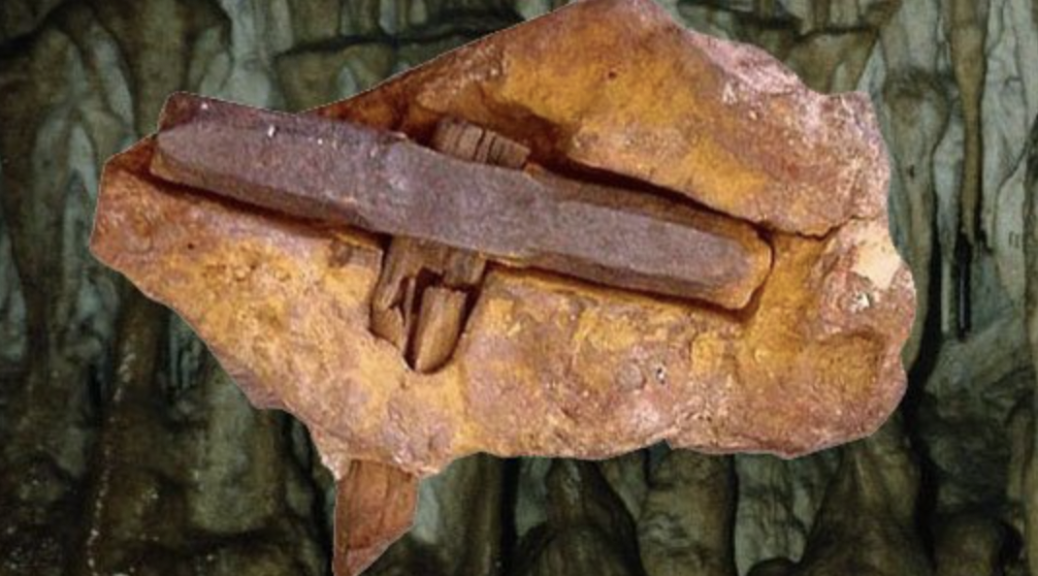
The story of the London Hammer begins in 1936 when it was reportedly found by a couple, Max Hahn and his wife, while they were hiking along the Red Creek. They noticed a curious piece of wood protruding from a rock and decided to take a closer look. Upon breaking the rock open, they discovered the hammerhead, which was tightly encased in what appeared to be ancient limestone. This discovery immediately sparked interest and speculation, as the rock encasing the hammer was thought to be over 100 million years old, leading to questions about the possibility of anachronistic artifacts.
Over the years, the London Hammer has been subjected to various analyses and testing, but its true origins remain elusive. Some researchers suggest that the hammer is a hoax or a misinterpretation of natural geological processes, while others believe it could be an authentic relic of an ancient civilization with advanced technological capabilities. Despite the ongoing debate, the London Hammer continues to be a topic of fascination and intrigue, drawing both skepticism and wonder from those who study it.
Table of Contents
- History and Discovery of the London Hammer
- Composition and Design of the London Hammer
- Scientific Analysis and Theories
- Debate: Ancient Artifact or Modern Hoax?
- Cultural and Historical Significance
- Implications for Archaeology and History
- Preservation and Display
- Public Interest and Media Coverage
- Comparisons to Other Anomalous Artifacts
- Philosophical and Theoretical Perspectives
- Frequently Asked Questions
- Conclusion
History and Discovery of the London Hammer
The London Hammer's journey into the annals of history began on a seemingly ordinary day in 1936 when Max Hahn and his wife were exploring the landscape near Red Creek in London, Texas. As they strolled along the creek bed, something unusual caught their eye—an enigma protruding from a rock that appeared to be a simple piece of wood. Little did they know that this seemingly insignificant find would ignite a firestorm of debate and speculation that would endure for decades.
Upon closer inspection, Max and his wife decided to break open the rock to uncover the mystery hidden within. To their astonishment, they discovered a metallic hammerhead encased in what appeared to be ancient limestone. This unexpected discovery raised immediate questions about the hammer's origins and the timeline of its entrapment in the rock. Could it be a relic from a bygone era, or was it a more recent introduction to the geological landscape?
As word of the discovery spread, the London Hammer quickly became a focal point of interest for both amateur enthusiasts and professional researchers. The rock surrounding the hammer was initially estimated to be over 100 million years old, based on the geological strata in which it was found. This estimation fueled speculation that the hammer might be an artifact from an advanced prehistoric civilization, challenging conventional understandings of human history and technological development.
However, not everyone was convinced by these initial assessments. Skeptics argued that the hammer could have been a modern tool that had somehow become encased in the rock through natural processes, such as mineral deposition or concretion. The lack of definitive evidence to support either theory only added to the intrigue and mystery surrounding the London Hammer, leaving room for a wide array of interpretations and theories.
In the years following its discovery, the London Hammer was subjected to various analyses and tests in an attempt to unravel its secrets. Despite these efforts, the artifact's origins and age remain a topic of heated debate and speculation. The story of the London Hammer is one that invites both skepticism and wonder, as it challenges us to reconsider our understanding of history and the potential for unknown technological advancements in the distant past.
Composition and Design of the London Hammer
The London Hammer is a relatively simple yet intriguing artifact, consisting of a wooden handle and a metallic hammerhead. Despite its straightforward design, the materials and craftsmanship of the hammer have fueled debates about its origins and age. Understanding the composition and design of the London Hammer is crucial to unraveling the mystery surrounding this enigmatic artifact.
The wooden handle of the London Hammer is approximately 15 cm long and appears to be made from a type of hardened wood. Over time, the handle has undergone a process of petrification, which has turned it into a fossilized form. This transformation has led some researchers to speculate that the wooden handle is significantly older than it appears, potentially dating back to a time when ancient trees were abundant in the region.
The metallic hammerhead is approximately 6.35 cm long and 2.54 cm in diameter, weighing around 0.5 kg. It is composed of iron with a small amount of chlorine, a combination that has sparked curiosity among metallurgists and historians alike. The iron used in the hammerhead is of high purity, which is unusual given the primitive smelting techniques supposedly available in ancient times. This has led some to question whether the hammerhead could be the product of advanced metallurgical knowledge from a lost civilization.
In addition to its composition, the design of the London Hammer has also been scrutinized. The hammerhead is cylindrical in shape, with a flat striking surface on one end and a pointed end on the other. This design is consistent with hammers used for various purposes, such as construction or tool-making. The craftsmanship of the hammerhead, combined with the high purity of the iron, suggests a level of skill and knowledge that would be atypical for the period in which it was supposedly created.
The preservation of the London Hammer is another aspect that has captured the attention of researchers. The encasement of the hammerhead in what appears to be ancient limestone has led to questions about the processes that could have resulted in such a phenomenon. Some researchers propose that the hammer was introduced into a soft sedimentary matrix, which then hardened over time to form the rock. Others suggest that the rock is not as old as initially thought, and that the hammer became encased through more recent geological processes.
Overall, the composition and design of the London Hammer present a tantalizing puzzle for those seeking to understand its origins. Whether it is a relic from a forgotten civilization or a more recent artifact that has become encased in rock through natural processes, the London Hammer continues to captivate the imaginations of researchers and enthusiasts alike.
Scientific Analysis and Theories
The London Hammer has been the subject of numerous scientific analyses and theories, each attempting to shed light on its origins and authenticity. Researchers have employed various methods, including radiocarbon dating, metallurgical analysis, and geological examination, to unravel the mystery surrounding this enigmatic artifact. Despite the wealth of data collected, the true nature of the London Hammer remains a topic of debate and speculation.
Radiocarbon dating has been one of the primary methods used to determine the age of the London Hammer. This technique, which measures the decay of carbon-14 isotopes in organic materials, has been applied to the wooden handle of the hammer. The results, however, have been inconclusive, with estimates ranging from a few hundred to several thousand years old. These discrepancies have fueled skepticism about the reliability of radiocarbon dating in this context, prompting researchers to explore alternative methods of analysis.
Metallurgical analysis has provided insight into the composition and purity of the iron used in the hammerhead. The iron is of high purity, containing only trace amounts of other elements, such as chlorine. This has led some researchers to suggest that the hammerhead could be the product of advanced metallurgical techniques, potentially from a lost civilization with knowledge beyond that of known ancient cultures. However, skeptics argue that the purity of the iron could be the result of natural processes, such as leaching or corrosion, rather than intentional craftsmanship.
Geological examination of the rock encasing the London Hammer has also been a focal point of analysis. The rock is believed to be a type of concretion, a sedimentary formation that occurs when mineral-rich water deposits cement-like materials around an object. The age of the rock has been estimated to be over 100 million years old, based on the geological strata in which it was found. This has led to speculation that the hammer could be an anachronistic artifact, potentially challenging the conventional timeline of human history. However, alternative theories suggest that the rock is not as old as initially believed, and that the hammer became encased through more recent geological processes.
Theories surrounding the London Hammer's origins are diverse and varied. Some researchers propose that the hammer is evidence of advanced prehistoric technology, possibly from a lost civilization that existed long before recorded history. Others argue that the hammer is a modern tool that has become encased in rock through natural processes, such as concretion or mineral deposition. Still, others suggest that the hammer is a hoax or a misinterpretation of geological phenomena, intentionally or unintentionally misleading researchers and enthusiasts.
Despite the wealth of scientific analysis and theories, the true nature of the London Hammer remains elusive. The artifact continues to be a subject of fascination and intrigue, prompting ongoing research and debate among those seeking to uncover its secrets. Whether it is a relic from a forgotten civilization or a modern tool encased in rock, the London Hammer remains a captivating mystery that challenges our understanding of history and technology.
Debate: Ancient Artifact or Modern Hoax?
The London Hammer has long been the center of a contentious debate, with opinions divided between those who view it as an ancient artifact and others who consider it a modern hoax. The controversy surrounding the hammer stems from the conflicting evidence and interpretations of its origins and age. As researchers and enthusiasts continue to explore the mystery, the debate over the London Hammer's authenticity remains a topic of heated discussion.
Proponents of the ancient artifact theory argue that the London Hammer is evidence of advanced prehistoric technology, potentially from a lost civilization that predates known historical records. They point to the high purity of the iron used in the hammerhead and the petrified state of the wooden handle as indicators of its antiquity. Additionally, the rock encasing the hammer, which is believed to be over 100 million years old, suggests that the artifact could be an anachronism, challenging conventional timelines of human history and technological development.
Supporters of this theory often cite similar anomalous artifacts, such as the Antikythera mechanism and the Baghdad Battery, as evidence of advanced technological knowledge in ancient times. They argue that the London Hammer could be part of a larger pattern of technological sophistication that has been lost to history, potentially due to natural disasters, societal collapse, or other factors. This perspective invites speculation about the possibility of unknown civilizations that once possessed knowledge and skills beyond those of known ancient cultures.
On the other hand, skeptics argue that the London Hammer is a modern tool that has become encased in rock through natural processes, such as concretion or mineral deposition. They contend that the hammerhead's high purity iron could be the result of leaching or corrosion, rather than advanced metallurgical techniques. Additionally, the discrepancies in radiocarbon dating results for the wooden handle cast doubt on its purported antiquity.
Skeptics also question the reliability of the initial geological assessments, suggesting that the rock encasing the hammer may not be as old as initially believed. They propose that the hammer could have been introduced into a soft sedimentary matrix, which then hardened over time to form the rock. This interpretation aligns with known geological processes and does not require the existence of advanced prehistoric technology.
Some researchers have even suggested that the London Hammer could be a hoax, either intentionally or unintentionally misleading those who study it. They argue that the artifact may have been planted or misinterpreted, intentionally creating a mystery that captivates the imaginations of researchers and enthusiasts alike.
Despite the ongoing debate, the London Hammer remains a fascinating subject of study and speculation. Whether it is an ancient artifact or a modern hoax, the mystery surrounding the hammer invites us to question our understanding of history and the potential for unknown technological advancements in the distant past. As research continues, the London Hammer serves as a reminder of the complexities and uncertainties inherent in the study of ancient artifacts and their origins.
Cultural and Historical Significance
The London Hammer holds a unique place in the cultural and historical landscape, serving as a symbol of the enduring mysteries and debates that surround our understanding of the past. Its discovery and subsequent analysis have sparked interest and intrigue among historians, archaeologists, and enthusiasts, prompting discussions about the potential for unknown civilizations and advanced prehistoric technology.
The cultural significance of the London Hammer lies in its ability to challenge conventional narratives about human history and technological development. As an artifact that defies easy categorization, the hammer invites us to consider the possibility of lost civilizations with knowledge and skills that have yet to be fully understood or documented. This perspective resonates with the human fascination for uncovering hidden truths and exploring the unknown, fueling curiosity and wonder about the mysteries of our past.
In addition to its cultural impact, the London Hammer also holds historical significance as a subject of study and debate. Its discovery has prompted researchers to re-evaluate existing theories and methodologies, encouraging a more nuanced understanding of the processes and factors that shape our interpretation of ancient artifacts. The ongoing analysis and discussion surrounding the hammer serve as a testament to the complexities and uncertainties inherent in the study of history and archaeology.
The London Hammer's role in popular culture further underscores its significance. As an enigmatic artifact, it has captured the imagination of the public, inspiring books, articles, and documentaries that explore its mystery and potential implications. This widespread interest highlights the enduring appeal of the unknown and the allure of uncovering hidden truths about our past.
Moreover, the London Hammer serves as a reminder of the importance of skepticism and critical thinking in the study of history and archaeology. Its discovery and subsequent analysis have prompted researchers to question existing assumptions and explore alternative explanations, emphasizing the need for rigorous examination and open-mindedness in the pursuit of knowledge.
In summary, the cultural and historical significance of the London Hammer lies in its ability to challenge conventional narratives and inspire curiosity and wonder about the mysteries of our past. As a subject of study and debate, it serves as a testament to the complexities and uncertainties inherent in the exploration of history and archaeology, reminding us of the importance of skepticism and critical thinking in the pursuit of knowledge.
Implications for Archaeology and History
The discovery and analysis of the London Hammer have significant implications for the fields of archaeology and history, challenging conventional narratives and prompting researchers to re-evaluate existing theories and methodologies. As an enigmatic artifact that defies easy categorization, the hammer invites us to consider the possibility of unknown civilizations and advanced prehistoric technology, reshaping our understanding of human history and technological development.
One of the primary implications of the London Hammer is its potential to challenge the established timeline of human history. If the hammer is indeed an ancient artifact, it suggests the existence of advanced technological knowledge long before recorded history, calling into question our current understanding of the development of human civilization. This perspective encourages researchers to explore alternative explanations and consider the possibility of lost civilizations with knowledge and skills that have yet to be fully understood or documented.
The London Hammer also highlights the importance of interdisciplinary collaboration in the study of ancient artifacts. Its analysis has involved researchers from various fields, including archaeology, geology, and metallurgy, each contributing their expertise to unravel the mystery surrounding the hammer. This collaborative approach emphasizes the need for diverse perspectives and methodologies in the pursuit of knowledge, encouraging a more nuanced understanding of the complexities and uncertainties inherent in the study of history and archaeology.
Furthermore, the London Hammer serves as a reminder of the importance of skepticism and critical thinking in the interpretation of ancient artifacts. Its discovery and subsequent analysis have prompted researchers to question existing assumptions and explore alternative explanations, emphasizing the need for rigorous examination and open-mindedness in the pursuit of knowledge. This perspective encourages a more critical and reflective approach to the study of history and archaeology, fostering a deeper understanding of the processes and factors that shape our interpretation of the past.
In addition to its implications for the fields of archaeology and history, the London Hammer also holds significance for the broader public. As an enigmatic artifact that has captured the imagination of researchers and enthusiasts alike, it serves as a symbol of the enduring mysteries and debates that surround our understanding of the past. Its widespread interest highlights the appeal of the unknown and the allure of uncovering hidden truths about our history, inspiring curiosity and wonder in the pursuit of knowledge.
In summary, the implications of the London Hammer for archaeology and history are far-reaching, challenging conventional narratives and prompting researchers to re-evaluate existing theories and methodologies. As an enigmatic artifact that defies easy categorization, it encourages a more critical and reflective approach to the study of history and archaeology, fostering a deeper understanding of the complexities and uncertainties inherent in the exploration of the past.
Preservation and Display
The preservation and display of the London Hammer are crucial aspects of its ongoing study and public engagement, ensuring that this enigmatic artifact remains accessible for future generations of researchers and enthusiasts. As a subject of fascination and intrigue, the hammer's preservation and display offer valuable insights into its origins and significance, contributing to our understanding of its cultural and historical impact.
Preservation efforts for the London Hammer focus on maintaining its current condition and preventing further deterioration. The artifact's components, including the wooden handle and metallic hammerhead, require careful conservation to ensure their long-term stability and integrity. This involves monitoring environmental factors, such as temperature, humidity, and light exposure, to minimize potential damage and degradation over time.
In addition to physical preservation, the documentation and analysis of the London Hammer are essential for ensuring its continued study and understanding. Detailed records of the hammer's discovery, composition, and analysis provide valuable information for researchers seeking to unravel its mystery and implications. This documentation serves as a foundation for ongoing research and analysis, contributing to our understanding of the artifact's origins and significance.
The display of the London Hammer offers an opportunity for public engagement and education, allowing individuals to explore its mystery and significance firsthand. Exhibitions featuring the hammer provide a platform for sharing its story and encouraging discussions about its implications for history and archaeology. These displays often incorporate interactive elements, such as multimedia presentations and educational materials, to enhance the visitor experience and foster a deeper understanding of the artifact.
The London Hammer's display also serves as a reminder of the importance of critical thinking and skepticism in the interpretation of ancient artifacts. By presenting the various theories and debates surrounding the hammer, exhibitions encourage visitors to question existing assumptions and explore alternative explanations, fostering a more nuanced understanding of the complexities and uncertainties inherent in the study of history and archaeology.
In summary, the preservation and display of the London Hammer are essential aspects of its ongoing study and public engagement, ensuring that this enigmatic artifact remains accessible for future generations of researchers and enthusiasts. Through careful conservation, documentation, and exhibition, the hammer's mystery and significance continue to captivate the imagination and inspire curiosity and wonder about the mysteries of our past.
Public Interest and Media Coverage
The London Hammer has captured the imagination of the public and become a topic of widespread interest and media coverage, inspiring curiosity and wonder about its origins and significance. As an enigmatic artifact that defies easy categorization, the hammer has generated discussions and debates that extend beyond academic circles, reaching a broader audience and sparking interest in the mysteries of our past.
Media coverage of the London Hammer has played a significant role in shaping public perception and understanding of the artifact. Articles, documentaries, and books exploring the hammer's discovery and analysis have introduced the mystery to a wider audience, highlighting its potential implications for history and archaeology. This coverage has contributed to the artifact's status as a symbol of the enduring debates and mysteries that surround our understanding of the past.
The London Hammer's presence in popular culture has further amplified public interest, with its story appearing in various forms of media, including television programs and online platforms. This widespread exposure has fueled curiosity and speculation about the artifact's origins, encouraging individuals to explore the theories and debates surrounding its authenticity and significance.
The public's fascination with the London Hammer reflects a broader interest in the unknown and the allure of uncovering hidden truths about our history. As an artifact that challenges conventional narratives and invites speculation about lost civilizations and advanced prehistoric technology, the hammer resonates with the human desire to explore and understand the mysteries of our past.
Public engagement with the London Hammer also underscores the importance of critical thinking and skepticism in the interpretation of ancient artifacts. The various theories and debates surrounding the hammer encourage individuals to question existing assumptions and explore alternative explanations, fostering a more nuanced understanding of the complexities and uncertainties inherent in the study of history and archaeology.
In summary, the London Hammer's public interest and media coverage have contributed to its status as a symbol of the enduring debates and mysteries that surround our understanding of the past. Through widespread exposure and engagement, the artifact continues to captivate the imagination and inspire curiosity and wonder about the mysteries of our history, encouraging a deeper exploration of the unknown and the pursuit of knowledge.
Comparisons to Other Anomalous Artifacts
The London Hammer is often compared to other anomalous artifacts that challenge conventional narratives and invite speculation about the existence of unknown civilizations and advanced prehistoric technology. These comparisons highlight the similarities and differences between these artifacts, offering valuable insights into their origins and significance, as well as the broader implications for our understanding of history and archaeology.
One of the most well-known anomalous artifacts is the Antikythera mechanism, an ancient Greek analog computer discovered in a shipwreck off the coast of the Greek island of Antikythera. Like the London Hammer, the Antikythera mechanism has sparked debates about the technological capabilities of ancient civilizations, with some researchers suggesting that it represents evidence of advanced knowledge and skills that have yet to be fully understood or documented.
Another intriguing artifact is the Baghdad Battery, a collection of terracotta jars believed to date back to the Parthian period in ancient Mesopotamia. These jars, which contain a copper cylinder and an iron rod, have been theorized to function as primitive batteries, potentially used for electroplating or other purposes. The Baghdad Battery, like the London Hammer, challenges conventional timelines of technological development and invites speculation about the existence of unknown knowledge and skills in ancient times.
The Piri Reis map, a 16th-century Turkish map that purportedly depicts parts of the Americas, Antarctica, and other regions with surprising accuracy, is another example of an anomalous artifact. The map's detailed depiction of coastlines and geographical features has led some researchers to suggest that it is evidence of advanced cartographic knowledge, possibly from a lost civilization with capabilities beyond those of known historical cultures.
These comparisons to other anomalous artifacts highlight the common themes and questions that arise in the study of such objects. Like the London Hammer, these artifacts challenge conventional narratives and timelines, prompting researchers to explore alternative explanations and consider the possibility of unknown civilizations with advanced knowledge and skills. They invite us to question our understanding of history and technology, fostering curiosity and wonder about the mysteries of the past.
In summary, comparisons to other anomalous artifacts offer valuable insights into the origins and significance of the London Hammer, as well as the broader implications for our understanding of history and archaeology. These comparisons highlight the common themes and questions that arise in the study of such objects, encouraging a deeper exploration of the unknown and the pursuit of knowledge about the mysteries of our past.
Philosophical and Theoretical Perspectives
The London Hammer, as an enigmatic artifact that defies easy categorization, invites philosophical and theoretical perspectives that extend beyond the realm of traditional archaeology and history. These perspectives explore the broader implications of the hammer's discovery and analysis, questioning our understanding of the past and the nature of knowledge itself.
One philosophical perspective considers the London Hammer as a symbol of the limitations of human knowledge and the inherent uncertainties in the study of history and archaeology. The ongoing debate surrounding the hammer's origins and significance serves as a reminder of the complexities and ambiguities that characterize our understanding of the past. This perspective encourages a more critical and reflective approach to the pursuit of knowledge, emphasizing the importance of skepticism and open-mindedness in the interpretation of ancient artifacts.
Another theoretical perspective explores the possibility of unknown civilizations and advanced prehistoric technology, as suggested by the London Hammer and other anomalous artifacts. This perspective invites us to consider the potential for lost knowledge and skills that have yet to be fully understood or documented, challenging conventional narratives and timelines of human history. It encourages researchers to explore alternative explanations and methodologies, fostering a more nuanced understanding of the processes and factors that shape our interpretation of the past.
The London Hammer also raises questions about the nature of evidence and the criteria used to evaluate the authenticity and significance of ancient artifacts. The conflicting interpretations and analyses of the hammer highlight the role of subjective judgment and the influence of cultural and historical context in shaping our understanding of the past. This perspective emphasizes the importance of critical thinking and interdisciplinary collaboration in the study of history and archaeology, encouraging a more holistic approach to the pursuit of knowledge.
In addition to these philosophical and theoretical perspectives, the London Hammer invites broader reflections on the human fascination with the unknown and the allure of uncovering hidden truths about our history. As an artifact that challenges conventional narratives and invites speculation about lost civilizations and advanced technology, the hammer resonates with the human desire to explore and understand the mysteries of the past. This perspective highlights the enduring appeal of the unknown and the pursuit of knowledge, inspiring curiosity and wonder about the mysteries of our history.
In summary, the philosophical and theoretical perspectives surrounding the London Hammer offer valuable insights into the broader implications of its discovery and analysis. These perspectives encourage a more critical and reflective approach to the study of history and archaeology, fostering a deeper understanding of the complexities and uncertainties inherent in the exploration of the past and the pursuit of knowledge.
Frequently Asked Questions
What is the London Hammer, and where was it discovered?
The London Hammer is an intriguing artifact consisting of a wooden handle and a metallic hammerhead, discovered in London, Texas, in 1936. It was reportedly found encased in ancient limestone, sparking debates about its origins and age.
Why is the London Hammer considered a mystery?
The London Hammer is considered a mystery because it challenges conventional narratives and timelines of human history. Its discovery in a rock believed to be over 100 million years old suggests the possibility of advanced prehistoric technology or unknown civilizations, leading to ongoing debates about its authenticity and significance.
What are the main theories about the London Hammer's origins?
The main theories about the London Hammer's origins include the possibility that it is an ancient artifact from a lost civilization with advanced technology, a modern tool that became encased in rock through natural processes, or a hoax or misinterpretation of geological phenomena.
Has the London Hammer been scientifically analyzed?
Yes, the London Hammer has been subjected to various scientific analyses, including radiocarbon dating, metallurgical analysis, and geological examination. However, the results have been inconclusive, and the true nature of the artifact remains a topic of debate and speculation.
What is the significance of the London Hammer in popular culture?
The London Hammer has captured the imagination of the public and become a topic of widespread interest and media coverage. Its mystery and potential implications for history and archaeology have inspired curiosity and wonder about the unknown, contributing to its status as a symbol of the enduring debates and mysteries of our past.
How does the London Hammer compare to other anomalous artifacts?
The London Hammer is often compared to other anomalous artifacts, such as the Antikythera mechanism and the Baghdad Battery, which also challenge conventional timelines and narratives of human history. These comparisons highlight common themes and questions about the existence of unknown civilizations and advanced prehistoric technology, fostering curiosity and exploration of the mysteries of our past.
Conclusion
The London Hammer remains an enigmatic artifact that continues to captivate the imaginations of researchers, enthusiasts, and the public alike. Its discovery and subsequent analysis have sparked debates and discussions that challenge conventional narratives of human history and technological development. Whether it is an ancient artifact from a lost civilization, a modern tool encased in rock through natural processes, or a hoax, the London Hammer serves as a symbol of the enduring mysteries and complexities inherent in the study of the past.
The implications of the London Hammer for archaeology and history are far-reaching, prompting researchers to re-evaluate existing theories and methodologies and encouraging a more critical and reflective approach to the pursuit of knowledge. Its preservation and display offer valuable insights into its origins and significance, ensuring that this enigmatic artifact remains accessible for future generations of researchers and enthusiasts.
As a subject of fascination and intrigue, the London Hammer invites us to question our understanding of history and the potential for unknown technological advancements in the distant past. Its story serves as a reminder of the importance of skepticism and critical thinking in the interpretation of ancient artifacts, fostering curiosity and wonder about the mysteries of our history and the pursuit of knowledge.